

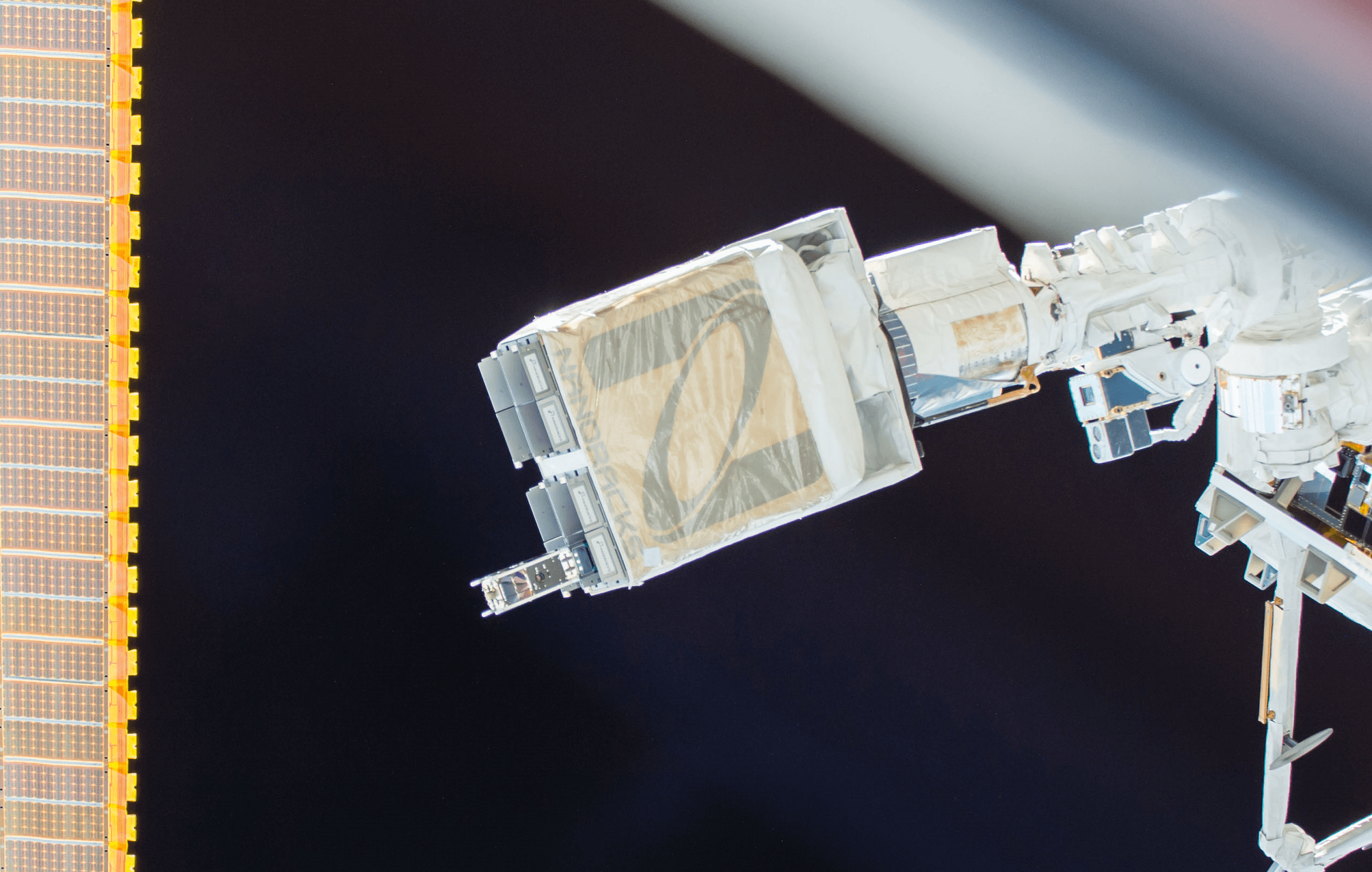
UPSat was a 2U CubeSat developed by the Libre Space Foundation in collaboration with the University of Patras as Greece’s contribution (GR-02) to the international QB50 atmospheric science constellation. It is widely recognised as the first satellite in orbit whose hardware and software were entirely open-source.
What LSF does
LSF redesigned, built and operated the spacecraft from scratch, contributing every major subsystem as open hardware/software: the STM32F4 on-board computer on FreeRTOS, the EPS with software MPPT, the ADCS sensor fusion stack (magnetometer, gyro, sun sensor, GPS), the UHF COMMS with TI CC1120 transceivers, the hybrid aluminium/carbon-fibre structure, an embedded Linux imaging payload, and the ground segment integration with SatNOGS. All designs were published under CERN-OHL v2 (hardware) and GPL-3.0 (software).
Where we’re going
UPSat set the precedent for fully transparent satellite engineering and seeded the open-source space ecosystem that LSF, SatNOGS, QUBIK and PHASMA build on today. It remains LSF’s reference mission and a teaching artefact for every subsequent flight programme.
Where the project stands
Decayed on 2018-11-12 after ~18 months of operations; all flight telemetry remains publicly available through SatNOGS.
Milestones
- 2013-2014 — University of Patras joins QB50 as GR-02; LSF partners on the build
- 2016 — Integration and environmental testing completed
- 2017-04-18 — Launched on Atlas V / Cygnus OA-7 to the ISS
- 2017-05-18 — Deployed from ISS via NanoRacks at 08:24 UTC
- 2017-2018 — Nominal operations, mNLP science, imaging, telemetry on SatNOGS
- 2018-11-12 — Atmospheric re-entry
Links
License
Hardware: CERN-OHL v2; Software: GPL-3.0