

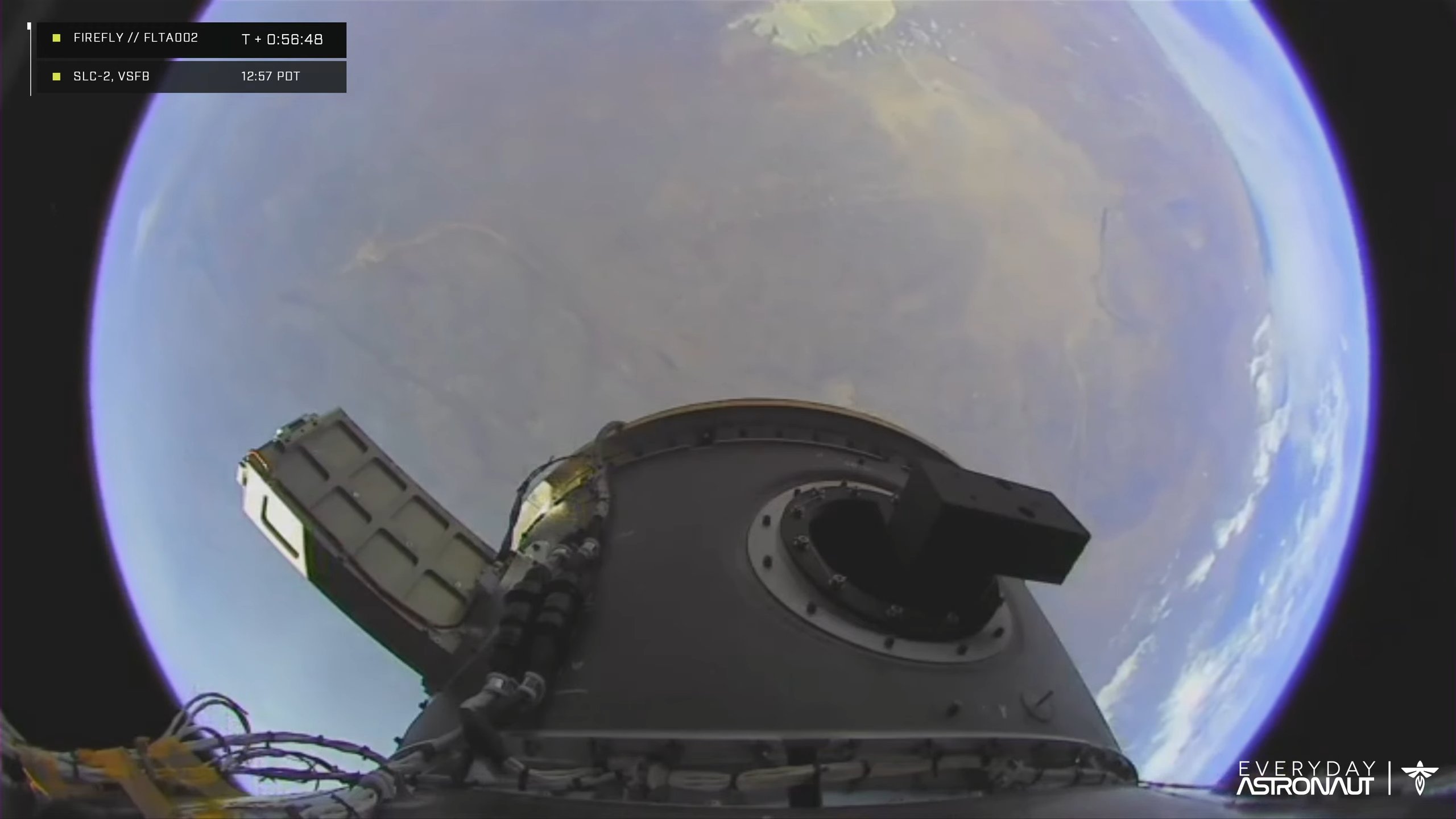
PICOBUS is LSF’s 8-slot PocketQube deployer, engineered to fly as a secondary payload on small launchers and release up to eight 1p PocketQubes (5×5×5 cm, under 250 g each). It is the first deployer of its class to be fully open-sourced.
What LSF does
LSF designed the mechanical structure, the spring-loaded ejection mechanism, the sequencer electronics, the flight interface to the launch vehicle, and the full ICD and integration manual. All CAD, electronics and documentation are openly published so that any PocketQube developer or small-launcher integrator can reuse the deployer.
Where we’re going
PICOBUS lowers the barrier for PocketQube missions by providing a standardised, auditable, open deployer — reducing lock-in to proprietary dispenser vendors and making small-satellite access to space more transparent. It remains LSF’s contribution to the PocketQube ecosystem and is designed to be manifested on future launches.
Where the project stands
One flight unit was lost with Firefly Alpha FLTA001 (2021-09-03); a second flew successfully on Firefly Alpha FLTA002 (2022-10-01) releasing QUBIK-3, QUBIK-4, FOSSASat-1B, FOSSASat-2, Genesis-N and Genesis-L. PICOBUS V2 flew on SpaceX Falcon 9 Transporter-18 (2026-10-01) on board UARX Space’s OSSIE-D orbital transfer vehicle and, from 2026-10-02, deployed a full load of eight PocketQubes: LSF’s SIDLOC PQ-03 to PQ-06 and NIS-PQ (QUBIK-5), and AMSAT-DL’s ERMINAZ-2U / -2V / -2X.
Milestones
- 2019-2021 — PICOBUS V1 designed and qualified
- 2021-09-03 — First flight attempt lost on Firefly Alpha maiden flight
- 2022-10-01 — Successful flight on FLTA002; six PocketQubes deployed
- 2023+ — PICOBUS V2 development underway
- 2026-10-01 — PICOBUS V2 launched on SpaceX Transporter-18 aboard UARX Space’s OSSIE-D; eight PocketQubes deployed from 2026-10-02
Links
License
Hardware: CERN-OHL v2; Software: GPL-3.0